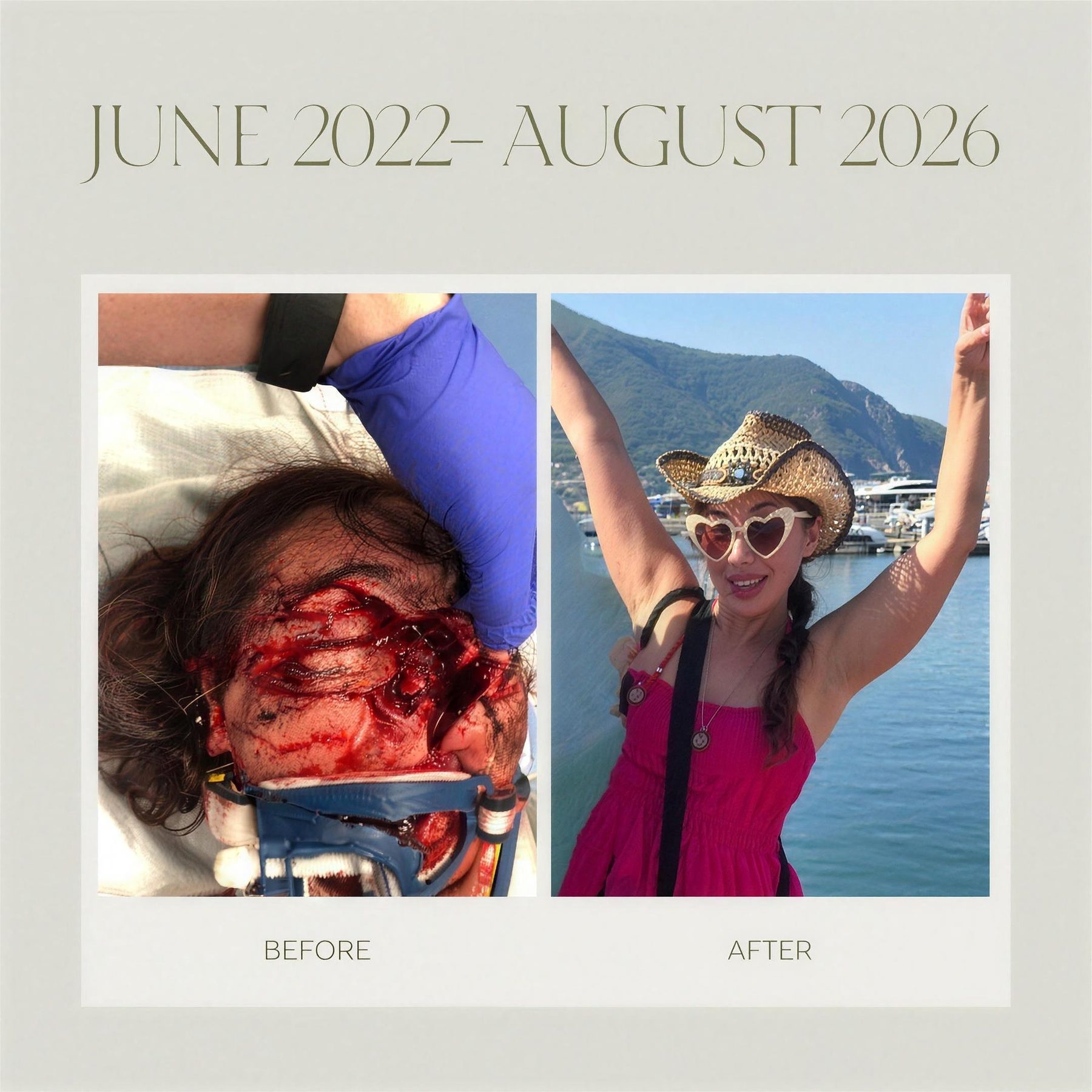




Psychologists and therapists. In therapy, there's no difference between a facial injury and any other trauma – yet your face is your identity. It's not a leg or an arm. None of the therapists I saw had any training in facial trauma.
When a lovely, well-put-together psychologist sits across from you telling you how to "cleanse yourself as a woman," you just don't want to walk back into that office. Clinical psychologist Lise Deguire, a facial and body burn survivor in the US, saw seven therapists.
She wrote that every one of them helped to a degree, "but not one of them showed awareness of the social stigma I faced as a disfigured woman."
When she tried to describe the pain of her burn dressings, even a good therapist she respected couldn't stay in the room with her story and admitted: "I did go away. I just couldn't take it."
In a UK survey of people with visible differences, many kept quiet about how they looked out of fear of "appearing superficial or feeling unentitled." On a support forum, a woman with a facial scar wrote that ordinary therapy couldn't bring back her face.